Zodawn Footprints: 2025

Dec 28, 2025

Looking Back at 2025: A Year That Tested Manipur

The year 2025 will be remembered in Manipur not for its calm, but for its courage. It was a year that continued to test the soul of the land - its people, its relationships, and its future - yet it also revealed a quiet, enduring resilience that refuses to be erased.

For Manipur, 2025 unfolded in the long shadow of unrest that began in May 2023. The wounds—physical, emotional, and communal—did not heal easily. Displacement remained a painful reality for thousands. Trust between communities stayed fragile, often strained by fear, misinformation, and memories of loss. Normal life—schools, markets, movement—resumed only in fragments, reminding everyone that peace is more than the absence of violence; it is the presence of dignity and security.

Dec 25, 2025

An overview of the attacks on Christians in India from 1990 up to 2025

An overview of the attacks on Christians in India from 1990 up to 2025, followed by a timeline of major incidents in 2025, including recent daily-reported violence. The data draws on multiple human-rights reporting sources, incident trackers from civil society groups such as the United Christian Forum (UCF) and advocacy reports, as well as notable historical documented events. Sources indicate that reported incidents are underestimates since many attacks go unreported or are not systematically recorded by government databases. Christian Today India+1 

Dec 23, 2025

Eighteen Years Together: A Journey of Love, Growth, and Enduring Commitment


Eighteen years (23.12.2007 - 23.12.2025) of marriage is not merely a measure of time; it is a testament to resilience, companionship, and the quiet strength that grows between two people who choose each other every day. In a world that moves fast and often celebrates instant gratification, reaching the milestone of 18 years together stands as a powerful reminder that lasting love is built patiently, through shared dreams, trials, and everyday moments.

Dec 22, 2025

World War III Concerns and Global Tensions

In an era defined by rapid geopolitical shifts and resurgent great-power competition, public fears about a potential World War III are hard to ignore. From Eastern Europe to the Middle East, and from the Indo-Pacific to global diplomatic forums, leaders and analysts alike are wrestling with an unsettling reality: the world’s security architecture is under strain.

Russia’s President Vladimir Putin has openly acknowledged these anxieties. Speaking at the St. Petersburg International Economic Forum, he warned

Dec 21, 2025

Why Cement Roads Make Sense in Manipur’s Hills - Explained!

Manipur’s road crisis is not merely about poor connectivity - it is about choosing the right engineering solutions for a difficult terrain. A frequent question raised by citizens, especially in hill districts like Lamka (Churachandpur), is why cement concrete roads are being built instead of bitumen roads.

The answer lies in geography and climate.

Manipur’s hill districts receive intense monsoon rainfall, often accompanied by landslides and soil erosion. Bitumen roads, which are flexible by design, deteriorate rapidly when water penetrates the surface layers. Potholes, cracks, and surface peeling become inevitable within a few monsoon cycles.

Dec 19, 2025

Article 371C of the Indian Constitution and the Tribal Communities of Manipur

 Constitutional Safeguards, Institutional Practice, and Contemporary Challenges

Abstract

Article 371C of the Indian Constitution was introduced as a special provision to safeguard the political, administrative, and cultural interests of the tribal communities inhabiting the hill areas of Manipur. Enacted in the context of Manipur’s transition to statehood, the provision sought to institutionalise participatory governance through the Hill Areas Committee (HAC) and to assign special responsibility to the Governor for hill administration. Despite its constitutional significance, Article 371C has remained under-implemented and institutionally weakened. This paper examines the historical origins, constitutional intent, institutional mechanisms, and practical limitations of Article 371C, situating it within Manipur’s broader ethnic and governance landscape. It argues that the erosion of Article 371C has contributed to tribal alienation and governance crises, and that strengthening its implementation is essential for democratic legitimacy and ethnic accommodation in Manipur.

Legal Comparison of Article 371C (Manipur), Article 371A (Nagaland), and the Sixth Schedule

Asymmetric Federalism and Tribal Autonomy in Northeast India

1. Introduction

India’s constitutional design accommodates diversity through asymmetric federal arrangements, particularly in regions with distinct ethnic, cultural, and historical identities. The North-Eastern region exemplifies this approach through a range of special provisions, most notably Article 371A, Article 371C, and the Sixth Schedule of the Constitution.

While all three mechanisms aim to protect tribal interests, they differ significantly in legal strength, institutional autonomy, and enforceability. This section undertakes a comparative legal analysis to assess how far Article 371C measures up against the more robust autonomy frameworks under Article 371A and the Sixth Schedule.

Dec 14, 2025

A Narrowing Path to Peace in Ukraine

As the Russia–Ukraine war grinds into yet another year, diplomacy has re-entered the spotlight, though not without controversy and deep uncertainty. Recent proposals circulating among Kyiv, Moscow, Washington and European capitals suggest a possible shift from maximalist war aims to pragmatic, if uncomfortable, compromises. Yet peace remains fragile, conditional, and far from assured.

Dec 13, 2025

Lamka’s Roads Are Failing Its People

Lamka, the commercial heartbeat of southern Manipur, is expanding rapidly in size, population, and economic activity. Yet its basic infrastructure - especially its roads - remains painfully behind. Daily commuters already know the routine: jolting through deep potholes, navigating half-finished drain lines, and breathing air thick with dust or diesel fumes. What should be a bustling, connected township instead feels like a maze of neglected terrain.

Dec 12, 2025

The Nupi Lan - Observed on 12th December

The Nupi Lan (meaning "Women's War" in the Meitei language) refers to two significant mass movements led by women in Manipur, British India, against colonial authorities and oppressive policies. These movements are landmark events in Manipuri history, renowned for their display of women's power and unity.

The First Nupi Lan (1904)

The first Nupi Lan broke out in 1904 in response to the British colonial authorities' reintroduction of the forced labour system known as the Lallup.

Dec 11, 2025

DAY-NRLM as a “Silent Economic Revolution” — Argument summary

DAY-NRLM (Deendayal Antyodaya Yojana — National Rural Livelihoods Mission) qualifies as a silent economic revolution because it deliberately builds millions of community institutions (SHGs → federations), channels financial inclusion and livelihoods supports through those institutions, and—over a decade—has quietly transformed the economic agency, savings/credit access, and market linkages of rural women and households. The revolution is “silent” because it advances structural change from the ground up (social capital, norms, local governance of livelihoods) rather than through headline big-ticket infrastructure projects.

Dec 10, 2025

Manipur’s Uneasy Calm: A Dangerous Silence in Our Own Backyard

From Imphal to Churachandpur, from Kangpokpi to Moreh, Manipur today sits under an uneasy calm. The gunfire has decreased, markets have partially reopened, and highways are operating under heavy security. Yet for ordinary citizens, this is not peace. It is a tense silence layered with fear, separation, and deep mistrust. Neighbours who once shared daily life now live across guarded buffer zones. What Manipur is witnessing is not reconciliation - but enforced coexistence under military watch.

A clean, categorised list of popular AI apps for the beginners


Artificial intelligence (AI) is technology that enables computers and machines to simulate human learning, comprehension, problem solving, decision making, creativity and autonomy. 
Applications and devices equipped with AI can see and identify objects. They can understand and respond to human language. They can learn from new information and experience. They can make detailed recommendations to users and experts. They can act independently, replacing the need for human intelligence or intervention (a classic example being a self-driving car).

The Journey of the Wise Men of the East: A Parable for the Contemporary World


Introduction

The biblical narrative of the Wise Men from the East—traditionally known as the Magi - occupies a brief yet profound place in the Gospel of Matthew (2:1–12). Though appearing only once in the New Testament, their journey has exerted immense influence on Christian theology, intercultural philosophy, and global ethics. The Magi symbolize seekers of truth, bearers of wisdom across civilizations, and agents of peace who transcend political fear and ethnic boundaries. In the contemporary world - marked by conflict, fragmentation, religious intolerance, and epistemic crisis - the journey of the Magi stands as a powerful parable for ethical leadership, spiritual discernment, and cross-cultural cooperation (Brown, 1993; Wright, 2001).

Dec 9, 2025

Christmas: Origin, Santa and Cultural Differences

Christians began celebrating Christmas on December 25th during the 3rd and 4th centuries, with early evidence from a Roman almanac in 354 AD. The date was influenced by theological reasoning, cultural context, and political factors, with connections to pagan winter solstice festivals like Sol Invictus. The Gospels do not provide a specific date for Jesus’ birth; early Christians focused more on Easter, and later used theological calculations to determine December 25th. Most Western Christian denominations celebrate Christmas on December 25th, while Eastern Orthodox churches often celebrate it on January 7th due to calendar differences.

1. The History of Christmas

Christmas has deep historical roots that blend Christian beliefs with ancient cultural traditions.

Dec 8, 2025

A Historical Analysis of the Global Readiness for the Birth of Christ

Abstract

This research outlines the convergence of geopolitical, cultural, and religious factors in the Mediterranean world during the first century BCE and the first century CE. Often termed Praeparatio Evangelica (Preparation for the Gospel), this period is characterised by the intersection of the Pax Romana (Roman political stability), Hellenistic cultural unification (linguistic standardisation), and the Jewish Diaspora. This study argues that these distinct historical currents created a unique "fullness of time" (Galatians 4:4), facilitating the rapid dissemination and reception of early Christianity.

Dec 7, 2025

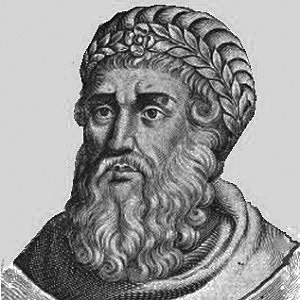
The Characters of Kind Herod

The character of Herod the Great (who ruled Judaea from c. 37–4 BCE) is defined by a deep and terrifying contradiction: he was both a magnificent, highly effective ruler and a brutally paranoid, tyrannical murderer.

His character can be summarised across three main dimensions, largely sourced from the detailed histories of the 1st-century Jewish historian Flavius Josephus.

1. The Politician and Administrator (The "Great")

Herod earned the title "the Great" from history due to his political savvy and his immense contributions to the prosperity and infrastructure of his kingdom.

The Lost Years or Silent Years of Jesus


The period between Jesus' childhood and the start of his public ministry is often called the "Lost Years" or "Silent Years" because the New Testament provides almost no biographical details for these 18 years.

The historical context, however, provides a very strong and widely accepted picture of what his life likely entailed.

1. The Extent of the Biblical Silence

The only event the Gospels record between his birth narrative and his baptism by John the Baptist is:

The Star of Bethlehem and Astronomical Events

That is a fascinating area of historical astronomy. Since the Gospel of Matthew describes a celestial event that signalled the birth to the Magi (astrologers/wise men), astronomers have used modern software to "rewind" the night sky and identify real events that occurred between 7 BCE and 2 BCE.

Here are the three leading scientific theories that attempt to pinpoint the date.

1. The Triple Conjunction (7 BCE)

  • The Date: A series of events occurring in May, September, and December of 7 BCE.
  • The Event: A "triple conjunction" of Jupiter and Saturn. In this rare event, Jupiter (the "King" planet) and Saturn (often associated with the Jewish people) passed close to each other three separate times within a few months.

Jesus' Birth: Traditional vs. Historical Theories

Despite the familiar Christmas traditions, there is no exact historical record of the specific day or location of Jesus' birth. The Gospels of the New Testament (the primary sources) do not provide a calendar date, and they offer differing accounts of the setting.

Because of this, the answer depends on whether you are asking for the religious tradition or the historical scholarly consensus.

1. The Date of Birth

  • Historical Estimate: c. 6 BCE – 4 BCE Most historians place Jesus' birth in this window. This is primarily because the Gospel of Matthew states Jesus was born during the reign of Herod the Great, who died in 4 BCE. If Jesus was born shortly before Herod's death, he would have been born around 6 to 4 BCE.

Dec 6, 2025

National Socialist Council of Nagaland (Khaplang) ban for an additional 5 years


The Government of India, through the Ministry of Home Affairs (MHA), has declared the National Socialist Council of Nagaland (Khaplang), commonly known as NSCN(K), as an "unlawful association." The ban was formally extended in September 2025 for an additional five years.

1. The Official Notification

Dec 4, 2025

ATSUM as the Primary Political Voice of Hill Tribes

 This article analyses the political evolution of the All Tribal Students’ Union of Manipur (ATSUM) from a student advocacy group into a central constitutional actor in Northeast India’s federal conflicts. Using archival memorandums, constitutional texts, and conflict jurisprudence, the study maps ATSUM’s legal mobilisation against structural marginalisation.

ATSUM memorandum history forms a crucial empirical foundation within Manipur’s broader political evolution. The student-led movement demonstrates how constitutional grievances transitioned from administrative marginalisation in the 1980s to internationalised human rights claims after 2023. The increasing juridification of ATSUM’s demands reveals the maturation of tribal political consciousness within India’s federal system.

Nov 29, 2025

Naga and Kuki Political Demands: Feasibility and Obstacles

The political demands of the Naga and Kuki communities in Northeast India are centred on self-determination, territory, and identity, with the government of India seeking a solution within the constitutional framework. The feasibility of these demands is heavily obstructed by competing claims over territory and the reluctance of the Centre to concede on issues of sovereignty.

⛰️ Naga Political Demands and Feasibility

The Naga issue is India's longest-running insurgency, with peace negotiations ongoing for decades, notably since the 1997 ceasefire with the National Socialist Council of Nagalim (Isak-Muivah) or NSCN-IM.

Meitei–Kuki–Naga Relations Before and After Indian Independence

History, Colonial Transformations, Post-Colonial State Formation, and Contemporary Conflict

Abstract

The relationship among the Meitei, Kuki, and Naga communities in Manipur is shaped by pre-colonial political economy, colonial ethnic classification, and post-independence state restructuring. Prior to British intervention, relations were characterised by fluctuating patterns of trade, warfare, tribute, and political subordination between valley-based Meitei kings and surrounding hill tribes. Colonial policies restructured land, identity, and administration, crystallising ethnic boundaries. After India’s independence and Manipur’s merger in 1949, democratic politics, constitutional safeguards, insurgent nationalism, and competing territorial claims transformed earlier socio-political interactions into rigid ethnic contestations. This paper traces these transformations through archival records, colonial ethnography, and post-independence political developments, demonstrating how historical state formation, identity institutionalisation, and development asymmetries culminated in protracted ethnic conflict, including the large-scale violence from 2023 onward.

The Kuki-Zo Political Movement: An Overview

The Kuki–Zo political movement refers to the collective political, cultural, and socio-ethnic aspirations of the Kuki, Zo, Zomi, and related tribes spread across India (Manipur, Mizoram, Assam, Tripura, Nagaland), Myanmar (Chin State, Sagaing), and Bangladesh (Chittagong Hill Tracts).

The movement is rooted in identity, autonomy, security, ethnic rights, and homeland aspirations.

1. Historical Background

a. Pre-colonial & Colonial Period

  • Kuki–Zo tribes lived in clan-based chieftainship systems across the Indo–Burma frontier.
  • They were never fully under the control of any single kingdom before the British.
  • The Anglo-Kuki/Zou War (1917–1919) was a major anti-colonial uprising resisting British rule.
  • Colonial administrative boundaries split related tribes across India, Myanmar, and Bangladesh—creating long-term geopolitical and ethnic issues.

Nov 28, 2025

Tribal rights and safeguards ensrines in the Indian Constitution

comprehensive, structured, and exam-ready explanation of Tribal Rights and Safeguards under the Indian Constitution, suitable for UPSC, State PSC, law students, policymakers, and community leaders.

TRIBAL RIGHTS & SAFEGUARDS IN THE INDIAN CONSTITUTION

(Scheduled Tribes – Constitutional Protection Framework)

1. CONSTITUTIONAL PHILOSOPHY BEHIND TRIBAL PROTECTION

The Indian Constitution recognises that Scheduled Tribes (STs) suffered from:

  • Historical isolation
  • Economic exploitation
  • Social discrimination
  • Educational backwardness
  • Land alienation

Therefore, the Constitution adopts a policy of:

The perspective of the Indian Government on Kuki-Zo Political Aspiration - Claims and Counter Claims

The perspective of the Government of India on the Kuki-Zo political aspiration, particularly the demand for a separate administration or Union Territory (UT) with a legislature in Manipur, can be summarized as follows:

1. Rejection of the Union Territory Demand

No to New UT: The Ministry of Home Affairs (MHA), which is conducting talks with the umbrella bodies of Kuki-Zo armed groups (Kuki National Organization or KNO and United People's Front or UPF), has firmly ruled out the demand for the creation of a new Union Territory with a legislative assembly.

Current Policy: The Centre's stated position is that its current policy does not support the creation of new Union Territories.

Persecution of Christians in Nigeria: A Complex and Ongoing Crisis

Historical Context and Roots of Religious Violence

  • Religious violence in Nigeria dates back to at least 1953, with tensions between Christian and Muslim communities.
  • The 1914 amalgamation of Nigeria combined diverse ethnic and religious groups, intensifying conflicts, especially in the Muslim-majority north and Christian-majority south.
  • Introduction of Sharia law in 12 northern states since 1999 has exacerbated religious tensions, with punishments for blasphemy and apostasy disproportionately affecting Christians.

Key Perpetrators: Boko Haram, Fulani Militants, and ISWAP

Chieftainship and Panchayati System: Differentiation

The structured differentiation between the Chieftainship System and the Panchayati System.

1. Basis of Authority

Chieftainship System

·         Authority is hereditary (passed down through lineage or clan).

·         Power is based on custom, tradition, and kinship.

·         Leadership is usually held by one family or clan.

Chieftainship: A Christian Perspective

From a Christian viewpoint, chieftainship is neither wholly good nor entirely bad. Like every form of human leadership, it depends on how closely it follows biblical principles of justice, humility, and service.

When Chieftainship Becomes a Boon from a Christian View

1. Leadership as a God-given Responsibility

Romans 13:1 teaches that all authority comes from God. When a chief leads with integrity, he becomes an instrument of God’s order and peace.

Is Chieftainship a Boon or a Curse? – A Balanced Perspective

- Pupu Zou

Chieftainship can be both a boon and a curse, depending on how it is practised, who benefits, and how it fits into today’s social realities. Here’s a balanced, clear analysis you can use for essays, speeches, or discussions:

When Chieftainship is a Boon

  1. Cultural Identity & Continuity
    • It preserves traditional customs, lineage, and collective identity.
    • Acts as a living link between ancestors and the community.
  2. Conflict Resolution & Social Order
    • Chiefs traditionally settle disputes quickly and cheaply.
    • Their authority can maintain harmony in small, close-knit societies.
  3. Custodians of Land & Resources

A comparison of Kuki vs Zo vs Naga ST status

 A clear, neutral, and structured comparison of the Scheduled Tribe (ST) status of Kuki, Zo, and Naga groups in India, with special focus on Manipur and the North-East.

COMPARISON: KUKI vs ZO vs NAGA – SCHEDULED TRIBE (ST) STATUS

1. Core Difference at a Glance

Aspect

Kuki

Zo

Naga

Nature of Identity

Legal–Political + Ethnic

Ethno-linguistic (Cultural)

Legal–Political + Ethnic

Mention in ST List

Yes (as “Any Kuki Tribes”)

No (as “Zo” not listed)

Yes (tribe-wise)

Constitutional Recognition

Direct

Indirect

Direct

Used in Official Records

Yes

Rarely

Yes

Homeland Concentration

Manipur, Mizoram, Assam, Tripura

Manipur, Mizoram, Myanmar

Nagaland, Manipur, Assam, Arunachal

Administrative Councils

ADCs in Manipur

None as “Zo”

Village Republic, Tribal Councils

Dynamics of Political Relationships Among States

Keywords: balance of power, geoeconomics, alliances, multilateralism, strategic rivalry, Indo-Pacific

Abstract

This paper examines the dynamics of political relationships among states by integrating major International Relations (IR) theories—realism, liberalism, and constructivism—with empirical evidence from three contemporary case studies: (1) U.S.–China strategic rivalry, (2) the Russia–Ukraine war and its effects on European security, and (3) the Indo-Pacific institutional response (QUAD, AUKUS, regional strategies).

Nov 15, 2025

69th UZO Annual Assembly 2025 - Presidential Address

PRESIDENTIAL ADDRESS PRESENTED TO THE DELEGATES OF THE 69TH UZO ANNUAL ASSEMBLY ON 13 OCTOBER 2025 AT ZOU GAL MEMORIAL CEMETERY COMPLEX, BEHIANG

BY THANGZAMANG, President, United Zou Organisation, General Headquarters

Amsapen in a 69 veina UZO Annual Assembly 2025 zangthei dinga chidam-ludamna hingpie, leitung bup a om chi-le-nam tampi umte lah a ei Zou tate zong nam khat-chi khat a hing siem, I ma uh hing pui jing I bieh uh Pa Pasian min phat kawm in tuni’a palai hing kalsuon jousie Chibai ka hing bu hi.

Tuoleh, I gam buai Meitei Gal laitah a chi-le-nam ngainatna toh tuni October nism 13 ni’a United Zou Organisation Annual Assembly 2025 palai a hing kalsuon UZO Adviser-te, UZO Lamkai masate, Zou Working Committee (ZWC) memberte, UZO Headquarter Executive Committee (HEC) member-te, Block Office Bearer-te,

Mar 20, 2025

EI-LE-EI IKI DOU UH BANG E APHATTUAMNA?

Unau khat iki dou un bang phattuamna um ahia?

Bang I lemlawh uh ahia? Bang changkangna hing tun ahia?

A naipen in en lei.... kum 1997 lai a i siltuate uh tunitan amanghil lou atamzaw kihi nalai ahi. Tuni'n ei-le-ei ki tualdel kia lei asuhdamna ding a kum 50 lam hing daikia ding, bang phattuom na I mu uh ahia? Lung geltha kia vai.

IKI DOU ua, I ki thatua ua, Inn-le-lou iki halsah tua ua i lemlawhte uh: