
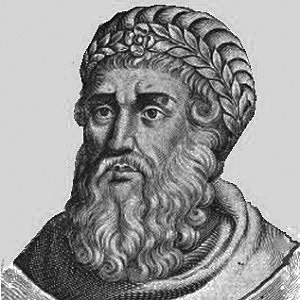
His character can be summarised across
three main dimensions, largely sourced from the detailed histories of the
1st-century Jewish historian Flavius Josephus.
1. The Politician and Administrator (The
"Great")
Herod earned the title "the Great" from history due to his political savvy and his immense contributions to the prosperity and infrastructure of his kingdom.
- Skilful Diplomat and Client King: Herod was a political genius. He was appointed "King of the Jews" by the Roman Senate. He maintained his power by forging shrewd, personal alliances with powerful Roman figures like Mark Antony and, crucially, later with Emperor Augustus (Octavian), even when his former patrons fell from grace. His primary characteristic was his unwavering loyalty to Rome.
- The Master Builder: This is Herod's most enduring legacy. He
launched colossal construction projects that are still marvelled at today:
- The spectacular renovation and massive expansion
of the Second Temple in Jerusalem.
- The construction of the magnificent port city
of Caesarea Maritima.
- The mountain fortress-palace of Masada and
his private retreat at Herodium.
Economic Steward: He brought a period of economic stability and prosperity, successfully navigating trade routes and even providing relief during times of famine by importing grain and reducing taxes.
2. The Insecure Tyrant (The Paranoia)
Despite his power, Herod was plagued by a
deep-seated insecurity stemming from his questionable legitimacy as a Jewish
ruler.
- Idumean Outsider: Herod was not of the traditional royal
Davidic line, nor was he fully Jewish by heritage (his father was Idumean,
his mother was Nabataean Arab). This made him deeply unpopular with many
of his Jewish subjects, particularly the Pharisees and the old
aristocratic families, who viewed him as an illegitimate foreign usurper.
- Extreme Paranoia: His lack of true internal support fueled a
destructive paranoia that defined his domestic life. He constantly feared
rivals, assassination plots, and insurrections.
- He employed an extensive network of spies
and secret police to monitor the populace.
- He built massive fortresses (like
Masada and Herodium) as potential refuges in case of revolt.
Ruthlessness and Cruelty: Herod believed the only way to secure his power was through absolute terror and the elimination of any possible threat. This cruelty escalated violently in his final years.
3. The Domestic Destroyer (The Family
Murders)
Herod's most notorious actions were
committed against his own immediate family, driven by jealousy, suspicion, and
the complex political rivalries within his court.
- Murder of His Family: Driven by the political threat posed by his
wife's aristocratic family (the Hasmoneans) and the schemes of his own
sister, Salome, Herod ordered the execution of numerous relatives:
- His beloved second wife, Mariamne I.
- Mariamne's mother, grandmother, and brother.
- Three of his own adult sons (Alexander, Aristobulus, and Antipater),
whom he suspected of plotting to seize his throne.
- Lack of Control: The famous Roman Emperor Augustus allegedly
quipped, "It is better to be Herod's pig than his son." This
comment highlights the stark fact that Herod's paranoia was so great that,
despite observing Jewish dietary laws (and thus not eating pork), his own
children were less safe than his livestock.
- The Gospel Conflict: His attempt to kill the infant Jesus (The
Massacre of the Innocents in Matthew 2), while not corroborated
by Josephus, is entirely consistent with his proven character as a man who
would eliminate any perceived threat to his crown, regardless of the
victim's age or innocence.
In conclusion, King Herod the Great was a
ruler who saw his kingdom as a precarious possession. He was willing to finance
grand construction projects for his people and murder his own family to keep it
safe. He was a man consumed by the pursuit of legacy and
the fear of usurpation.
Summary
Character of King Herod the Great
The detailed portrait of Herod is based on the writings of the most crucial non-biblical source for the 1st century.
|
Claim |
Primary Source |
Context/Content |
|
General Biography, Building Projects, Paranoia,
Family Murders (Mariamne, his sons) |
Flavius Josephus (Antiquities
of the Jews and The Jewish War). |
Josephus (c. 37–100 CE) is the principal historian
for this period. He detailed Herod's ruthlessness, his massive construction
of the Temple, Masada, and Caesarea, and the infamous execution of his own
family members. |
|
Massacre of the Innocents |
Gospel of Matthew (2:16–18) |
This event is consistent with Herod's paranoia, as
documented by Josephus, but it is not mentioned in Josephus's
extensive record of Herod's other crimes. This is why it remains a subject of
intense debate among historians. |
References:
Josephus, F. (1987). The works of Josephus: Complete and unexpurgated (W. Whiston, Trans.). Hendrickson Publishers. (Original works written c. 75–95 CE).
Josephus's Antiquities of the Jews and The Jewish War provide the essential details on Herod's political appointment by Rome, his Idumean heritage, his paranoia, his execution of family members (Mariamne and his sons), and his colossal building programs (the Temple, Masada, Caesarea).
The Holy Bible, New International Version. (2011). Zondervan. (Original works written c. 50–100 CE).
The Gospel of Matthew (2:16-18) is the sole source for the account of the Massacre of the Innocents (The Gospel Conflict), which is consistent with Herod's historically documented ruthlessness.
Grant, M. (1993). The Jews in the Roman world. Barnes & Noble.
A historical text that discusses Herod's role as a Roman client king, his success as a political ally of Augustus, and the immense scale of his infrastructure projects (The Master Builder).
Jones, A. H. M. (1938). The Herods of Judea. Clarendon Press.
A classic study that details Herod's domestic life and political struggles, providing the context for his deep insecurity, his repeated purges of the Hasmonean family, and the paranoia that led to the murder of his sons.
Schürer, E. (1973). The history of the Jewish people in the age of Jesus Christ (175 B.C.–A.D. 135) (Rev. ed., G. Vermes & F. Millar, Eds.). T&T Clark.
A foundational historical resource that analyzes the Jewish population's view of Herod (The Insecure Tyrant/Idumean Outsider) and the political necessity of his massive fortresses and security measures.


No comments:
Post a Comment