

Dec 11, 2025
DAY-NRLM as a “Silent Economic Revolution” — Argument summary

Dec 10, 2025
Manipur’s Uneasy Calm: A Dangerous Silence in Our Own Backyard
From Imphal to Churachandpur, from Kangpokpi to Moreh, Manipur today sits under an uneasy calm. The gunfire has decreased, markets have partially reopened, and highways are operating under heavy security. Yet for ordinary citizens, this is not peace. It is a tense silence layered with fear, separation, and deep mistrust. Neighbours who once shared daily life now live across guarded buffer zones. What Manipur is witnessing is not reconciliation - but enforced coexistence under military watch.
A clean, categorised list of popular AI apps for the beginners

Artificial intelligence (AI) is technology that enables computers and machines to simulate human learning, comprehension, problem solving, decision making, creativity and autonomy. Applications and devices equipped with AI can see and identify objects. They can understand and respond to human language. They can learn from new information and experience. They can make detailed recommendations to users and experts. They can act independently, replacing the need for human intelligence or intervention (a classic example being a self-driving car).
The Journey of the Wise Men of the East: A Parable for the Contemporary World
.jpeg)
Introduction
The biblical narrative of the Wise Men from the East—traditionally known as the Magi - occupies a brief yet profound place in the Gospel of Matthew (2:1–12). Though appearing only once in the New Testament, their journey has exerted immense influence on Christian theology, intercultural philosophy, and global ethics. The Magi symbolize seekers of truth, bearers of wisdom across civilizations, and agents of peace who transcend political fear and ethnic boundaries. In the contemporary world - marked by conflict, fragmentation, religious intolerance, and epistemic crisis - the journey of the Magi stands as a powerful parable for ethical leadership, spiritual discernment, and cross-cultural cooperation (Brown, 1993; Wright, 2001).
Dec 9, 2025
Christmas: Origin, Santa and Cultural Differences
.jpeg) Christians began celebrating Christmas on December 25th during the 3rd and 4th centuries, with early evidence from a Roman almanac in 354 AD. The date was influenced by theological reasoning, cultural context, and political factors, with connections to pagan winter solstice festivals like Sol Invictus. The Gospels do not provide a specific date for Jesus’ birth; early Christians focused more on Easter, and later used theological calculations to determine December 25th. Most Western Christian denominations celebrate Christmas on December 25th, while Eastern Orthodox churches often celebrate it on January 7th due to calendar differences.
Christians began celebrating Christmas on December 25th during the 3rd and 4th centuries, with early evidence from a Roman almanac in 354 AD. The date was influenced by theological reasoning, cultural context, and political factors, with connections to pagan winter solstice festivals like Sol Invictus. The Gospels do not provide a specific date for Jesus’ birth; early Christians focused more on Easter, and later used theological calculations to determine December 25th. Most Western Christian denominations celebrate Christmas on December 25th, while Eastern Orthodox churches often celebrate it on January 7th due to calendar differences.
1. The History of Christmas
Christmas has deep historical roots that blend Christian beliefs with ancient cultural traditions.
Dec 8, 2025
A Historical Analysis of the Global Readiness for the Birth of Christ

This research outlines the convergence of geopolitical, cultural, and religious factors in the Mediterranean world during the first century BCE and the first century CE. Often termed Praeparatio Evangelica (Preparation for the Gospel), this period is characterised by the intersection of the Pax Romana (Roman political stability), Hellenistic cultural unification (linguistic standardisation), and the Jewish Diaspora. This study argues that these distinct historical currents created a unique "fullness of time" (Galatians 4:4), facilitating the rapid dissemination and reception of early Christianity.
Dec 7, 2025
The Characters of Kind Herod
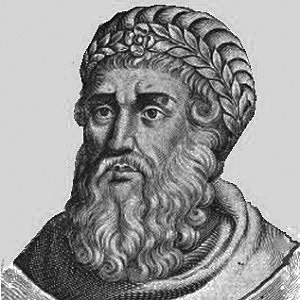
His character can be summarised across
three main dimensions, largely sourced from the detailed histories of the
1st-century Jewish historian Flavius Josephus.
1. The Politician and Administrator (The
"Great")
Herod earned the title "the Great" from history due to his political savvy and his immense contributions to the prosperity and infrastructure of his kingdom.
The Lost Years or Silent Years of Jesus
.jpeg)
The period between Jesus' childhood and
the start of his public ministry is often called the "Lost Years"
or "Silent Years" because the New Testament provides almost no
biographical details for these 18 years.
The historical context, however, provides
a very strong and widely accepted picture of what his life likely entailed.
1. The Extent of the Biblical Silence
The only event the Gospels record between his birth narrative and his baptism by John the Baptist is:
The Star of Bethlehem and Astronomical Events
.jpg)
Here are the three leading scientific
theories that attempt to pinpoint the date.
1. The Triple Conjunction (7 BCE)
- The Date: A
series of events occurring in May, September, and December of 7
BCE.
- The Event: A "triple conjunction" of Jupiter and Saturn. In this rare event, Jupiter (the "King" planet) and Saturn (often associated with the Jewish people) passed close to each other three separate times within a few months.
Jesus' Birth: Traditional vs. Historical Theories

Because of this, the answer depends on
whether you are asking for the religious tradition or
the historical scholarly consensus.
1. The Date of Birth
- Historical Estimate: c. 6 BCE – 4 BCE Most historians place Jesus' birth in this window. This is primarily because the Gospel of Matthew states Jesus was born during the reign of Herod the Great, who died in 4 BCE. If Jesus was born shortly before Herod's death, he would have been born around 6 to 4 BCE.
Subscribe to:
Comments (Atom)