Zodawn Footprints

Dec 8, 2025

A Historical Analysis of the Global Readiness for the Birth of Christ

Abstract

This research outlines the convergence of geopolitical, cultural, and religious factors in the Mediterranean world during the first century BCE and the first century CE. Often termed Praeparatio Evangelica (Preparation for the Gospel), this period is characterised by the intersection of the Pax Romana (Roman political stability), Hellenistic cultural unification (linguistic standardisation), and the Jewish Diaspora. This study argues that these distinct historical currents created a unique "fullness of time" (Galatians 4:4), facilitating the rapid dissemination and reception of early Christianity.

Dec 7, 2025

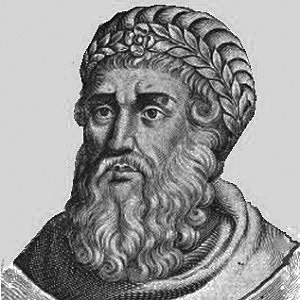
The Characters of Kind Herod

The character of Herod the Great (who ruled Judaea from c. 37–4 BCE) is defined by a deep and terrifying contradiction: he was both a magnificent, highly effective ruler and a brutally paranoid, tyrannical murderer.

His character can be summarised across three main dimensions, largely sourced from the detailed histories of the 1st-century Jewish historian Flavius Josephus.

1. The Politician and Administrator (The "Great")

Herod earned the title "the Great" from history due to his political savvy and his immense contributions to the prosperity and infrastructure of his kingdom.

The Lost Years or Silent Years of Jesus


The period between Jesus' childhood and the start of his public ministry is often called the "Lost Years" or "Silent Years" because the New Testament provides almost no biographical details for these 18 years.

The historical context, however, provides a very strong and widely accepted picture of what his life likely entailed.

1. The Extent of the Biblical Silence

The only event the Gospels record between his birth narrative and his baptism by John the Baptist is:

The Star of Bethlehem and Astronomical Events

That is a fascinating area of historical astronomy. Since the Gospel of Matthew describes a celestial event that signalled the birth to the Magi (astrologers/wise men), astronomers have used modern software to "rewind" the night sky and identify real events that occurred between 7 BCE and 2 BCE.

Here are the three leading scientific theories that attempt to pinpoint the date.

1. The Triple Conjunction (7 BCE)

  • The Date: A series of events occurring in May, September, and December of 7 BCE.
  • The Event: A "triple conjunction" of Jupiter and Saturn. In this rare event, Jupiter (the "King" planet) and Saturn (often associated with the Jewish people) passed close to each other three separate times within a few months.

Jesus' Birth: Traditional vs. Historical Theories

Despite the familiar Christmas traditions, there is no exact historical record of the specific day or location of Jesus' birth. The Gospels of the New Testament (the primary sources) do not provide a calendar date, and they offer differing accounts of the setting.

Because of this, the answer depends on whether you are asking for the religious tradition or the historical scholarly consensus.

1. The Date of Birth

  • Historical Estimate: c. 6 BCE – 4 BCE Most historians place Jesus' birth in this window. This is primarily because the Gospel of Matthew states Jesus was born during the reign of Herod the Great, who died in 4 BCE. If Jesus was born shortly before Herod's death, he would have been born around 6 to 4 BCE.